Between the rate you were quoted and the money that leaves your account sit about a dozen lines. Here is what each one is, which are negotiable, and which are not.
Blackstone Realty · 7 August 2026 · 8 min read
A cost sheet is the single most useful document in the whole process and the one buyers spend the least time on. It is usually one page, it is usually emailed as an image, and it usually contains between ten and fifteen lines that nobody explains.
Here is what each line is.
The base
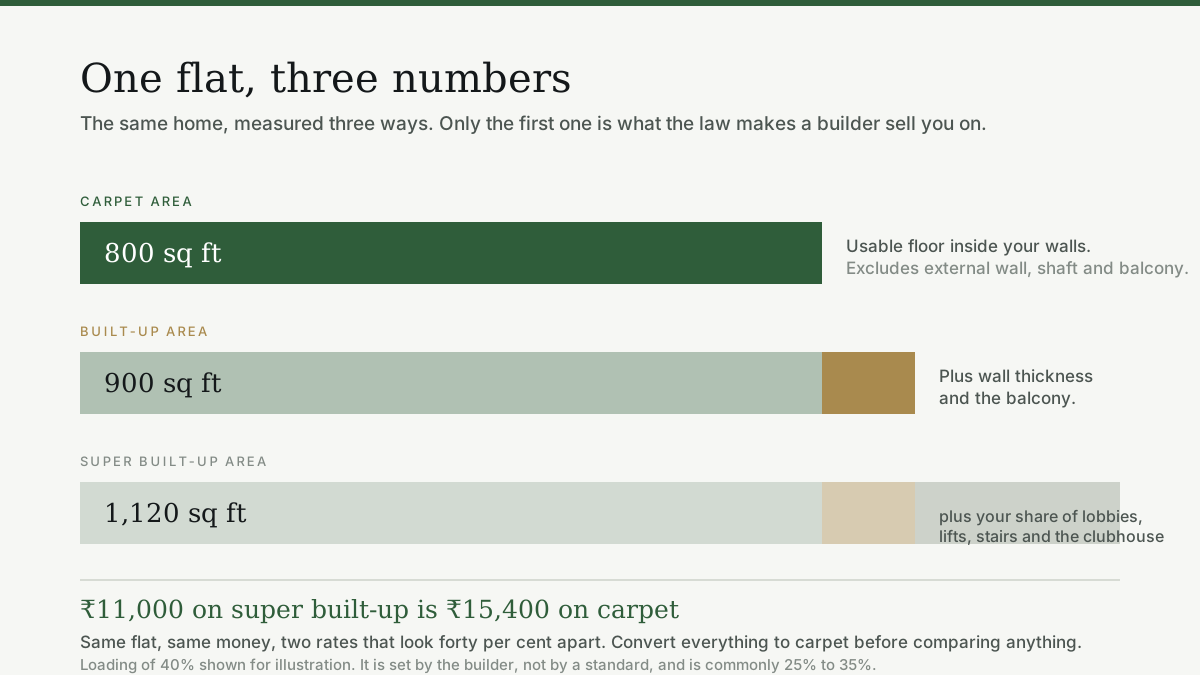
Basic sale price. Carpet area multiplied by the base rate. This is the number everyone quotes and it is rarely more than eighty per cent of the total.
Floor rise. A per square foot premium that increases with height, typically from a threshold floor upwards. On a twenty-one storey tower it can add several lakh between the fourth floor and the nineteenth. Ask for the full floor-rise table, not the rate for your floor.
Preferred location charge. Corner units, park facing, or whatever the developer has decided is desirable. Entirely a pricing decision, which makes it one of the more negotiable lines.
The additions
Car parking. Ask how many spaces are included, whether they are allotted or floating, and where physically they are. Basement levels look identical on a plan and very different at the bottom of a ramp.
Club membership or infrastructure charge. A one-time payment, often ₹1 to ₹3 lakh, for access to the amenities you are already paying to build.
Maintenance advance. Usually twelve to twenty-four months collected upfront. Ask what happens to the unspent balance at handover to the society, and get the answer in the agreement rather than in conversation.
Corpus or sinking fund. A one-time contribution held for major repairs. It transfers to the society at handover.
Electricity, water and gas connection charges. Pass-through costs, small individually, several lakh in total on a large flat.
The statutory lines
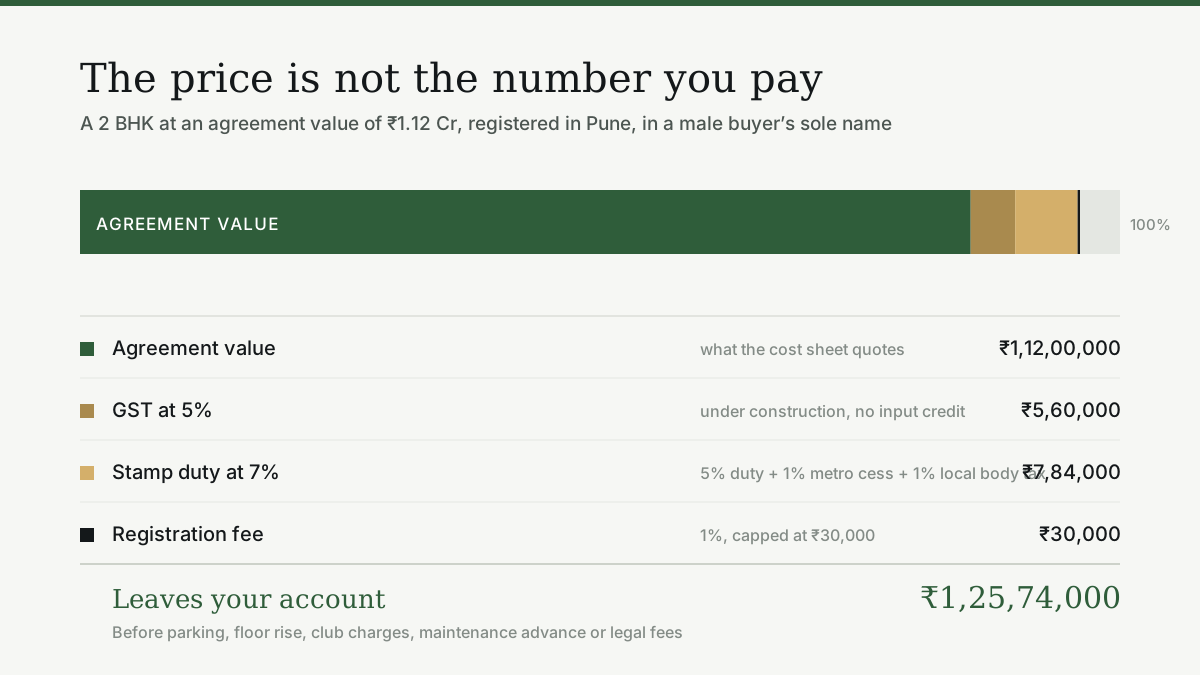
GST at 5 per cent on an under-construction flat, with no input credit reaching you.
Stamp duty at 7 per cent in Pune, or 6 per cent in a woman’s sole name.
Registration at 1 per cent, capped at ₹30,000.
These three are not negotiable with anybody. They are set by the state and by the GST Council, and a sales team offering to waive them is offering something they cannot deliver.
The three statutory lines alone add about ₹13.74 lakh to a ₹1.12 Cr agreement value. None of them are negotiable. · Illustration
The payment schedule matters as much as the total
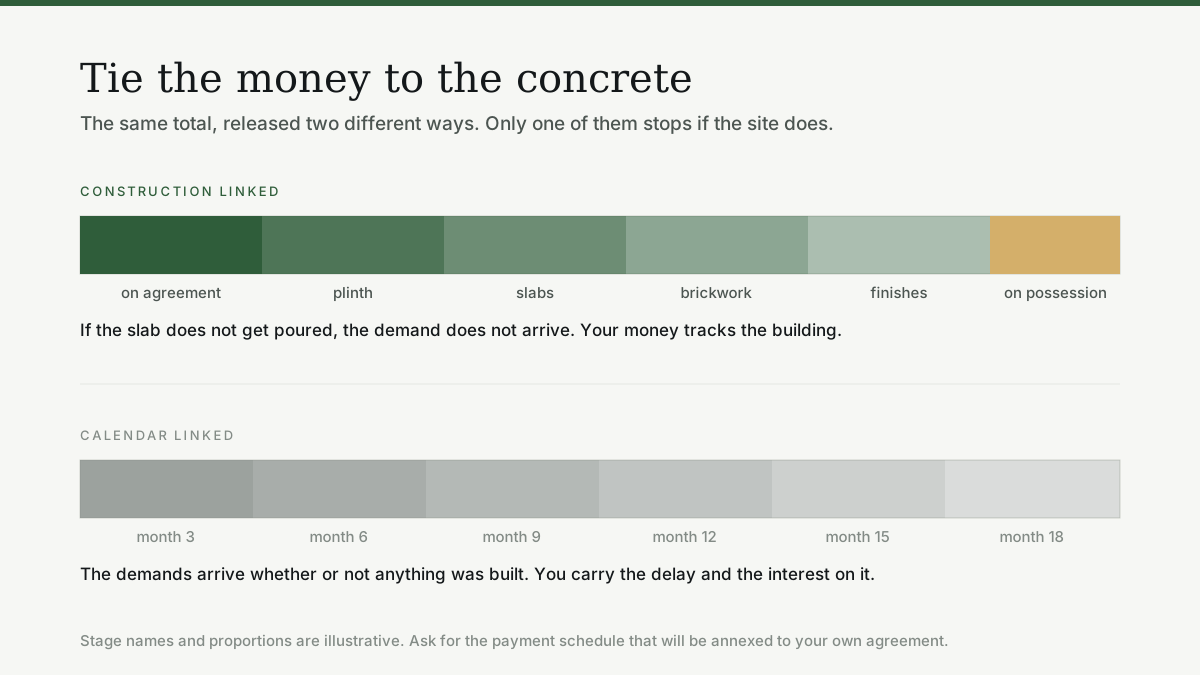
The chart at the top of this page shows the same total released two ways, and the difference between them is worth more than most discounts.
A construction-linked plan ties each instalment to a stage of the building: on agreement, on plinth, on each slab, on brickwork, on finishes, on possession. If the slab does not get poured, the demand does not arrive.
A calendar-linked plan ties instalments to months. The demands arrive whether or not anything was built, and you carry both the delay and the interest on money you have already paid.
Where you have a choice, take the construction-linked plan even at a slightly worse headline price. You are buying an alignment of interest, and it is worth more than the discount.
What is actually negotiable
Roughly in order of how much give there usually is.
Preferred location charge and floor rise. Both are pure pricing decisions.
Club membership and one-time charges. Frequently waived on a serious booking, particularly early in a launch.
The base rate, which moves less than people expect and is the line developers defend hardest, because a discount here sets a precedent for every subsequent buyer.
The payment schedule. Often easier to shift than the price, and worth more than a small discount.
Nothing statutory. GST, stamp duty and registration do not move.
Before you pay anything
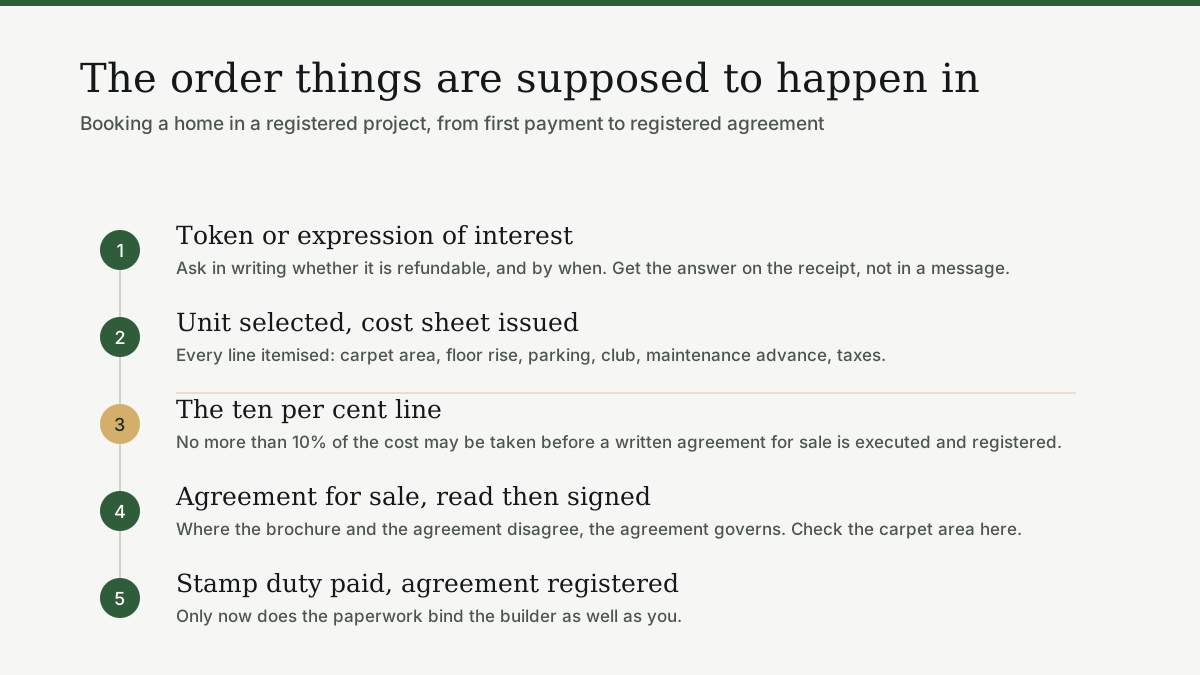
Get the cost sheet itemised, confirm the payment schedule is tied to construction stages, and remember that no more than ten per cent of the cost may be taken before a written agreement for sale is executed and registered.
A booking amount handed over on the day, in the lounge, on the strength of a discount that expires this evening, is the decision people most often revisit.
Booking a pre-launch flat: the sequence and the ten per cent rule
Five steps between the first payment and a registered agreement, the documents to collect at each, and the one legal limit that decides how much anyone can take from you before it.
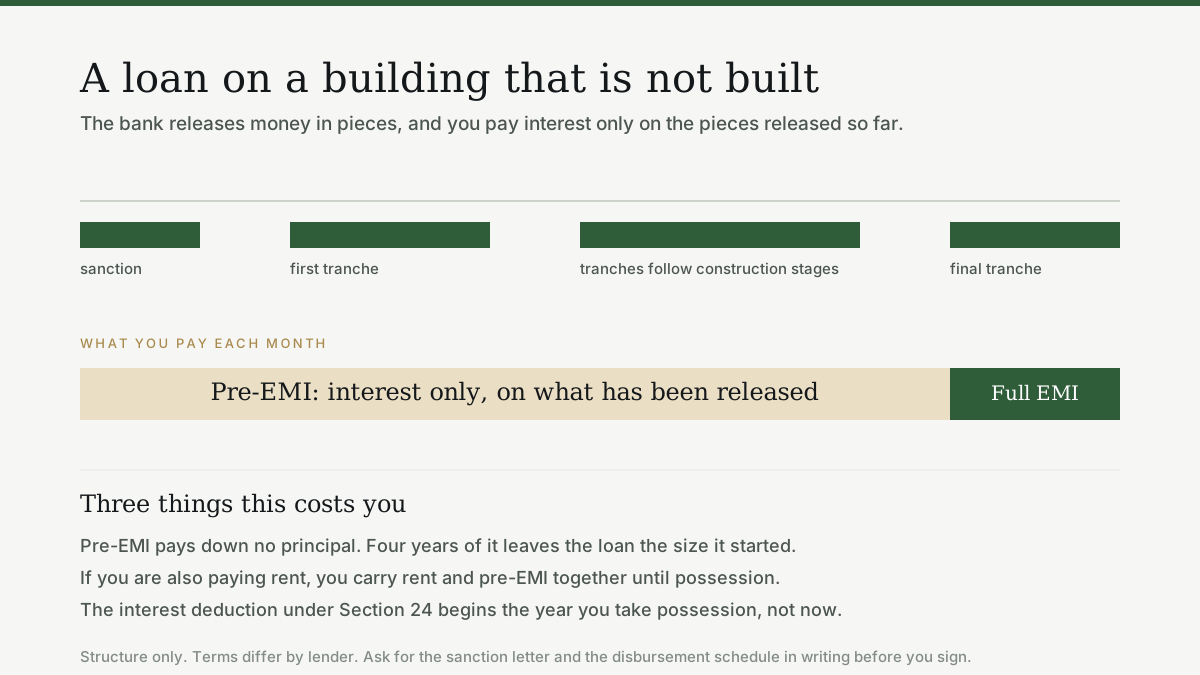
Part disbursement, pre-EMI, and a tax deduction that does not start until you have the keys. What a loan on a 2030 possession actually costs you between now and then.
Carpet, built-up and super built-up: which number you are actually buying
Three area figures, one flat, and a gap between them that can reach thirty per cent. Only one of the three is what the law makes the builder sell you on.