Part disbursement, pre-EMI, and a tax deduction that does not start until you have the keys. What a loan on a 2030 possession actually costs you between now and then.
Blackstone Realty · 10 August 2026 · 7 min read
A loan on a ready flat is simple. The bank pays the seller, you get the keys, you start paying EMIs. A loan on a flat that will be finished in 2030 works differently in three ways, and each of them costs money that nobody puts in the brochure.
1. The money arrives in pieces
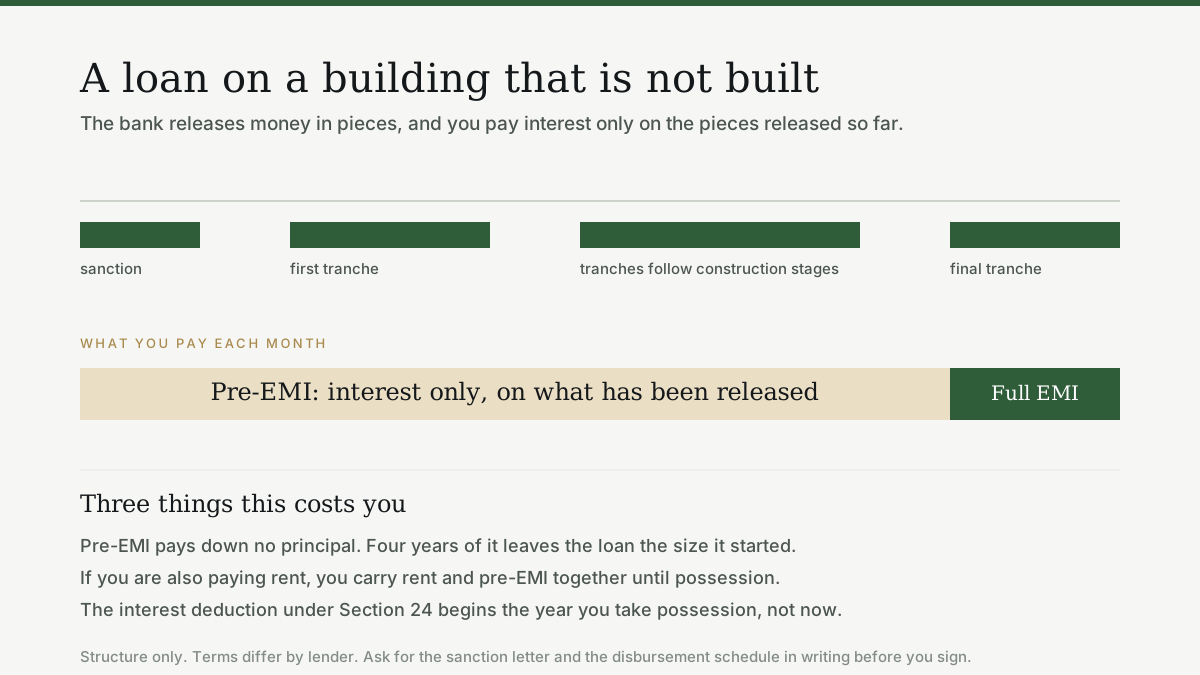
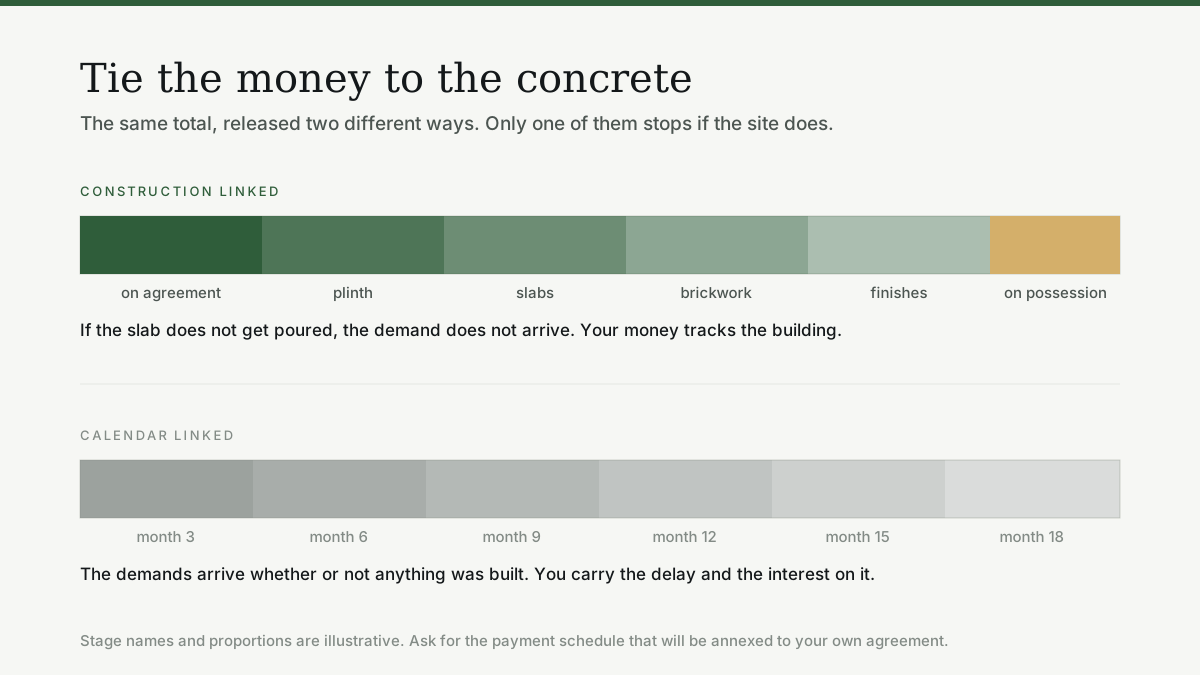
The bank sanctions the full amount but does not hand it over. It releases tranches against construction stages, usually on the same schedule as the developer’s demand letters: plinth, each slab, brickwork, finishes, possession.
Practically this means the developer raises a demand, you forward it to the bank, the bank inspects or verifies, and then releases. Each cycle takes time, and a late release is your problem rather than the bank’s. Build a buffer into your own planning for it.
2. Pre-EMI pays down nothing
Until the loan is fully disbursed, most lenders charge pre-EMI: interest only, on the amount released so far. No principal.
The monthly figure looks comfortable, which is why people accept it without doing the arithmetic. Four years of pre-EMI on a possession in 2030 leaves the loan exactly the size it started, and the full-EMI clock begins on the day you take possession rather than four years ago.
Some lenders will let you pay full EMI from the start instead. If you can afford it, it is almost always the better decision. You start amortising immediately and you shorten the total term.
The bank's tranches follow the developer's demand letters, so the payment plan you agree decides the shape of your pre-EMI too. · Illustration
3. The tax break starts later than you think
Interest paid during construction does not get deducted in the year you pay it. It is accumulated and then allowed in five equal instalments, starting from the financial year in which construction is completed and you take possession.
The deduction under Section 24 for a self-occupied property is capped, and the pre-construction interest gets absorbed within that same cap rather than added on top of it. For most buyers with a large loan, the annual interest alone already fills the cap, which means a meaningful share of the pre-construction interest ends up delivering no tax benefit at all.
The principal deduction under Section 80C behaves the same way: it is not available on repayments made before construction is complete.
What lenders will and will not fund
They fund a percentage of the agreement value, typically up to 75 to 90 per cent depending on the ticket size.
They do not fund stamp duty, registration or GST. On the ₹1.12 crore example that is about ₹13.74 lakh from your own funds, on top of the down payment.
They usually do not fund one-time charges such as club membership, maintenance advance or corpus.
Add it up before you assume the down payment is the only cash you need. It generally is not.
What to ask the lender before you sign
Is the project on your approved list? An approved project means the bank has already done its own legal and technical diligence, which is free diligence for you. A project nobody will lend against is information.
Can I pay full EMI during construction instead of pre-EMI?
What is the disbursement turnaround from demand letter to release?
Are there prepayment charges? On a floating rate loan to an individual there should be none.
What happens if the project is delayed beyond the sanctioned period, and does the sanction lapse?
The summary
A pre-launch price is a discount, and pre-EMI is part of what you pay for it. The comparison that matters is the total cost of buying now and waiting four years against the total cost of buying something finished at a higher price today.
Both can be the right answer. Only one of them is usually calculated.
This is general information, not tax or financial advice. Confirm the treatment applying to your own case with a chartered accountant and your lender before you commit.
Sources
Income Tax Act 1961, Sections 24 and 80C, as applicable to housing loans
Standard lender practice on construction-linked disbursement, India, 2026
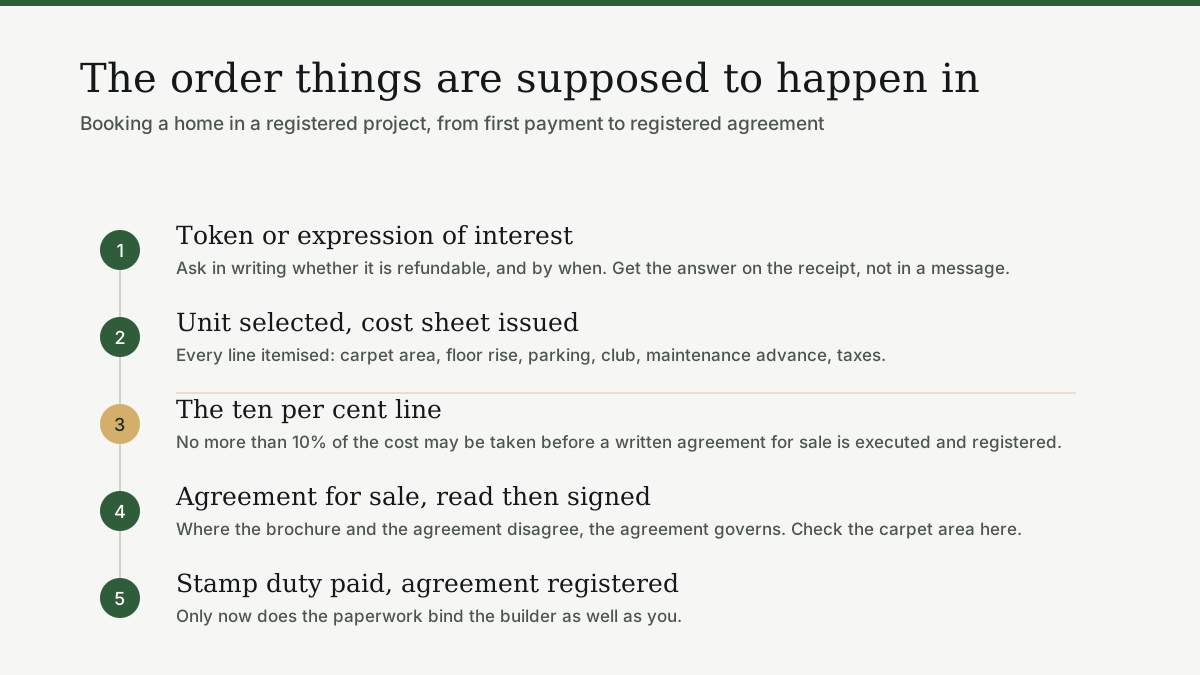
Booking a pre-launch flat: the sequence and the ten per cent rule
Five steps between the first payment and a registered agreement, the documents to collect at each, and the one legal limit that decides how much anyone can take from you before it.
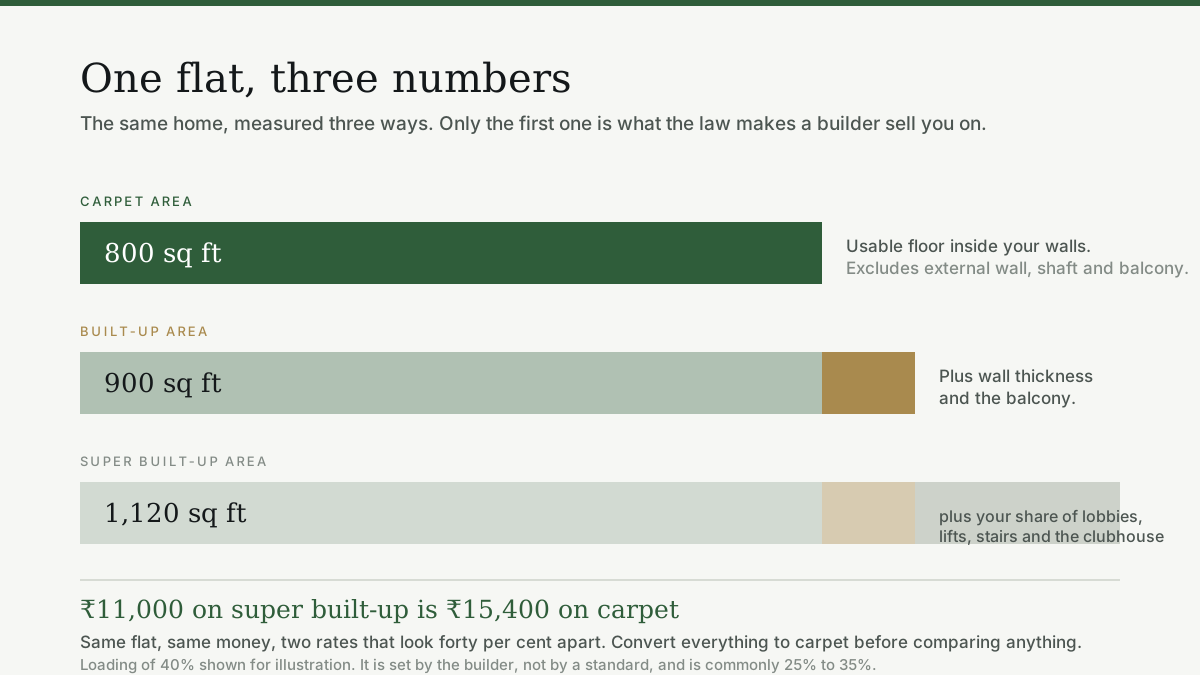
Carpet, built-up and super built-up: which number you are actually buying
Three area figures, one flat, and a gap between them that can reach thirty per cent. Only one of the three is what the law makes the builder sell you on.
What to check on a site visit, beyond the show flat
The show flat is built to be liked. An hour spent on the things it is not designed to show you will tell you more about living there than the tour will.