Booking a pre-launch flat: the sequence and the ten per cent rule
Five steps between the first payment and a registered agreement, the documents to collect at each, and the one legal limit that decides how much anyone can take from you before it.
Blackstone Realty · 10 August 2026 · 7 min read
Most of what goes wrong in a property purchase goes wrong in the order things happened, not in the price. Money moves before paperwork, then the paperwork has to accommodate the money.
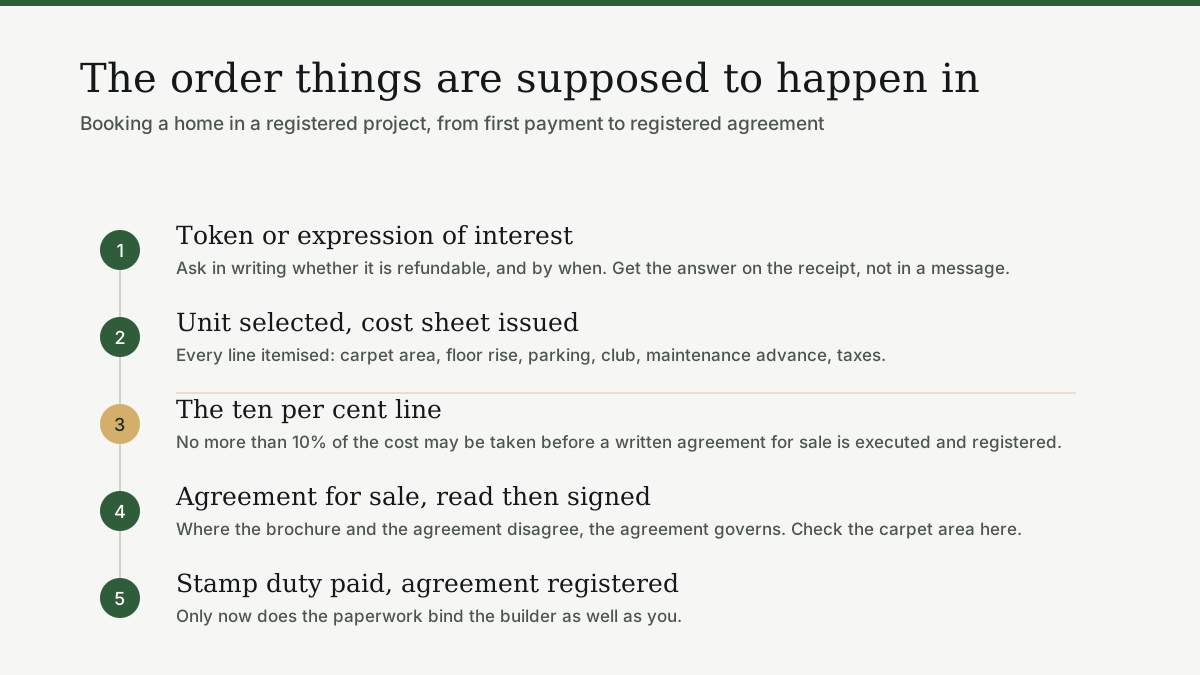
Here is the sequence, in the order it is supposed to run.
Step 1: Token or expression of interest
A small payment to hold a position before the price list exists. Ask in writing whether it is refundable and by when, and get the answer printed on the receipt rather than sent in a message.
Check who the payee is. It should be the registered promoter entity or an authorised escrow, never an individual, and the receipt should carry the registered name.
Step 2: Unit selected, cost sheet issued
Ask for the cost sheet for the specific unit with every line itemised: carpet area, base rate, floor rise, preferred location charge, parking, club membership, maintenance advance, corpus, connection charges, GST, stamp duty and registration.
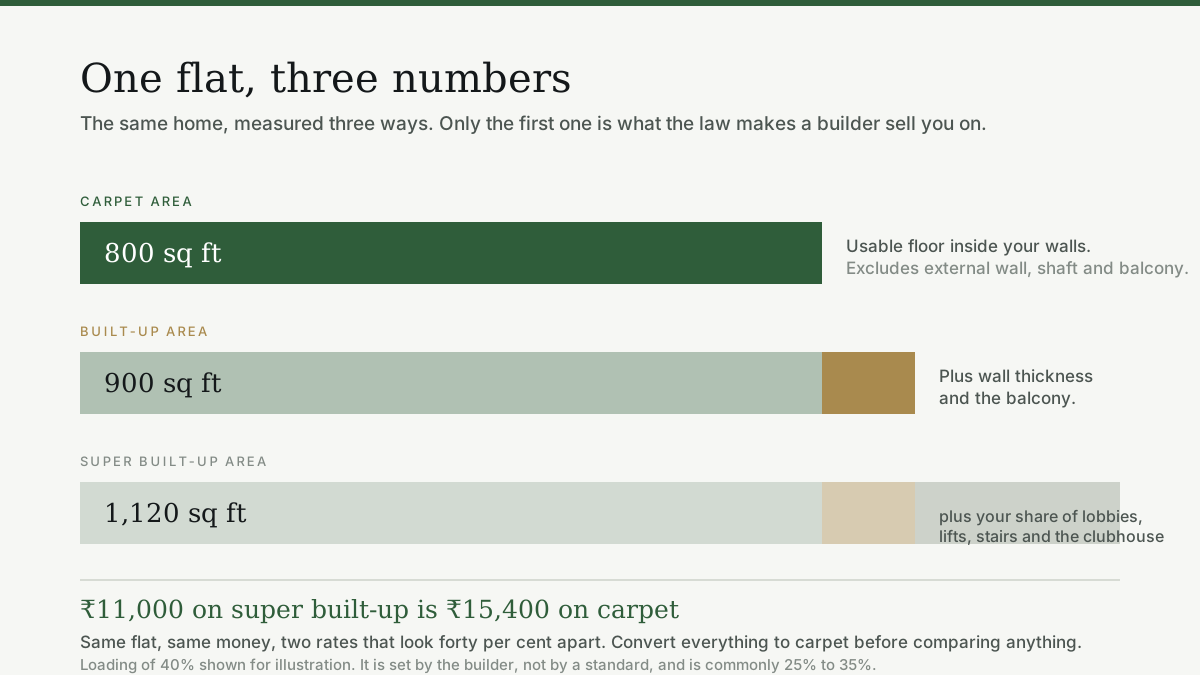
Divide the all-inclusive total by the carpet area. That number is comparable across projects. The quoted rate per square foot is not.
Step 3: The ten per cent line
This is the one step in the sequence set by law rather than by the developer.
Under Section 13 of the Real Estate (Regulation and Development) Act, a promoter cannot accept more than ten per cent of the cost of the apartment as an advance or application fee without first entering into a written agreement for sale, and registering that agreement.
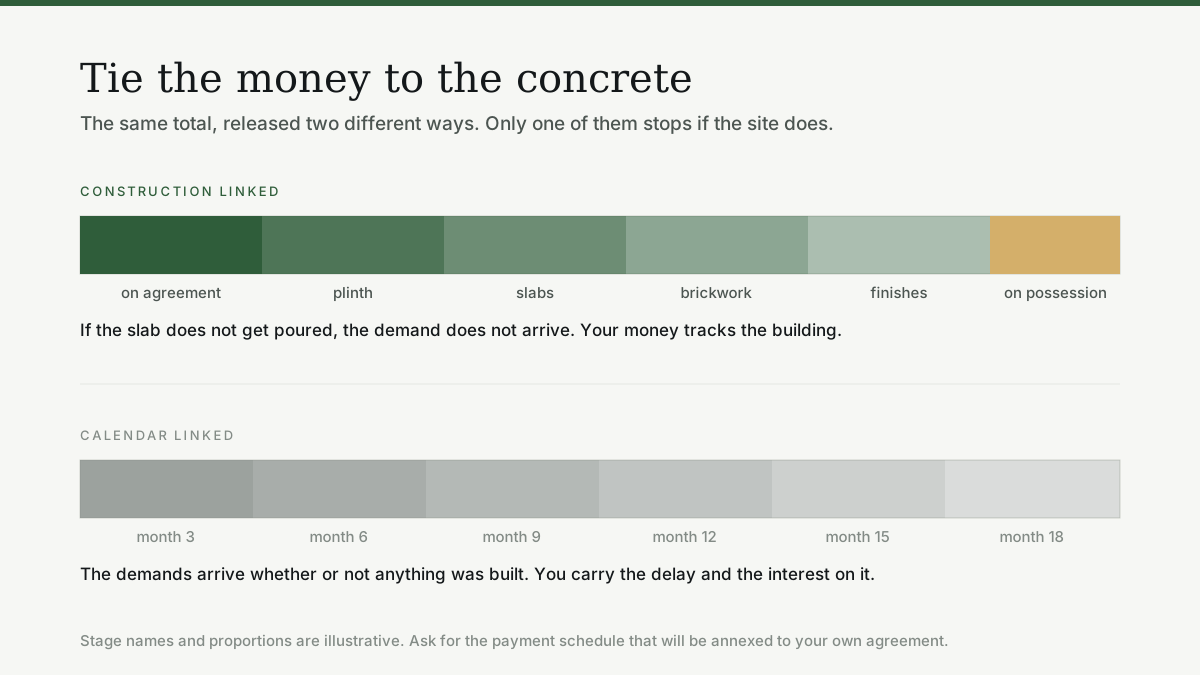
The payment schedule annexed to the agreement. Tied to construction stages, a stalled site stops the demands. · Illustration
Step 4: The agreement for sale, read before it is signed
Five things to check inside it.
The carpet area. Where a brochure and the agreement disagree, the agreement governs, and the brochure usually says so in small print.
The completion date, and what happens if it is missed. There should be a stated rate of interest payable to you on delay, and it should be symmetrical with what you pay on a late instalment.
The specification list. Flooring, fittings, sanitaryware, doors, windows, brand names where given. The show flat is staging. This annexure is the commitment.
The payment schedule, which should be tied to construction stages rather than calendar dates.
The cancellation and forfeiture terms. Read the clause that applies if you walk away, and the one that applies if they do.
Have a lawyer read it. It costs a few thousand rupees against a purchase of over a crore, and it is the least exciting hour of the whole process and the most useful one.
Step 5: Stamp duty paid, agreement registered
Registration is what makes the agreement enforceable. Seven per cent stamp duty in Pune, six per cent in a woman’s sole name, plus one per cent registration capped at ₹30,000.
Until this step is done, the paperwork binds you more than it binds the developer. After it, both sides are on the same document.
The documents to collect along the way
MahaRERA registration certificate for the phase covering your wing
Sanctioned layout and floor plan for that phase, downloaded from the portal
Title certificate and the search report from the developer’s advocate
Commencement certificate for the tower you are buying in
Allotment letter, cost sheet and every payment receipt
The agreement for sale with all its annexures
What to avoid
Paying anything on the day of the first visit. Every discount that expires this evening is available next week, and a sales process built around urgency is built that way because urgency stops people reading.
Take the cost sheet home. Look up the registration on the portal. Then decide.
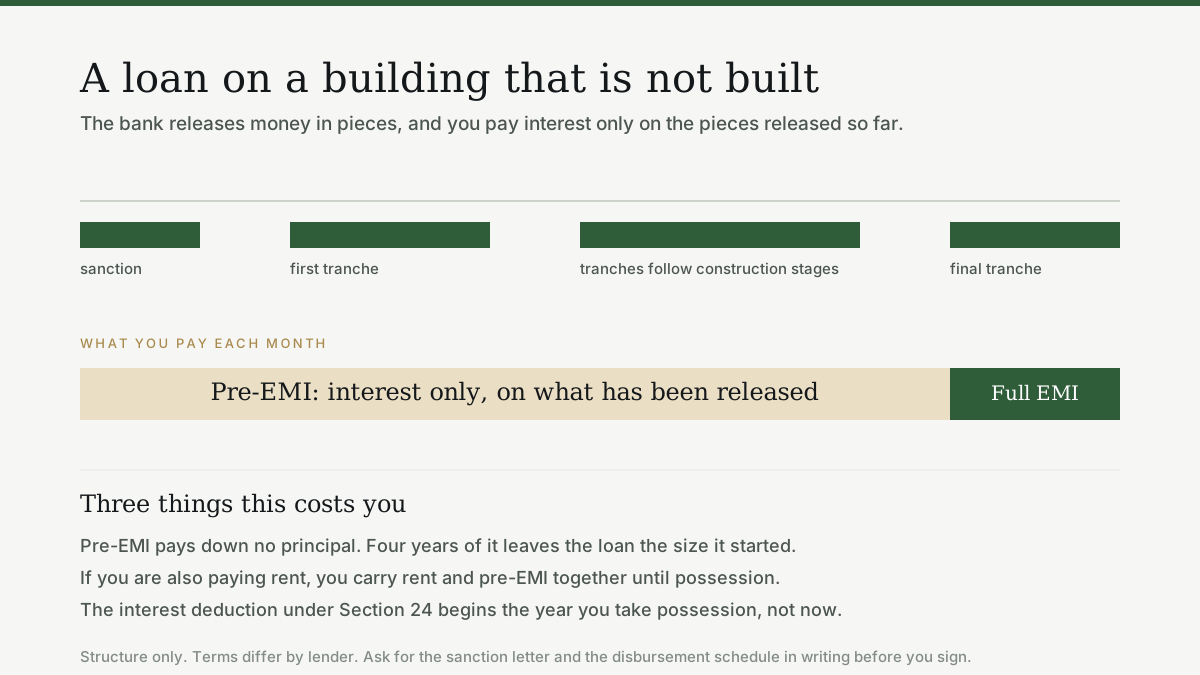
Part disbursement, pre-EMI, and a tax deduction that does not start until you have the keys. What a loan on a 2030 possession actually costs you between now and then.
Carpet, built-up and super built-up: which number you are actually buying
Three area figures, one flat, and a gap between them that can reach thirty per cent. Only one of the three is what the law makes the builder sell you on.
What to check on a site visit, beyond the show flat
The show flat is built to be liked. An hour spent on the things it is not designed to show you will tell you more about living there than the tour will.