Pre-launch tokens: refundable, non-refundable, and what you get
Three token tiers are on offer here, from ₹99,000 to ₹2.49 lakh, and one of them is refundable. What a token buys, what it does not, and the questions to ask before you pay one.
Blackstone Realty · 7 August 2026 · 6 min read
The developer’s own campaign for this project publishes no price. What it publishes is an invitation to take a token in exchange for rate benefits at launch. Three tiers are listed by the project’s marketing partners.
Gold Token, ₹99,000. Refundable. Applies to 2, 3 and 4 BHK.
Platinum Token, ₹1,49,000. Non-refundable. 2 and 3 BHK.
Platinum Token, ₹2,49,000. Non-refundable. 4 BHK.
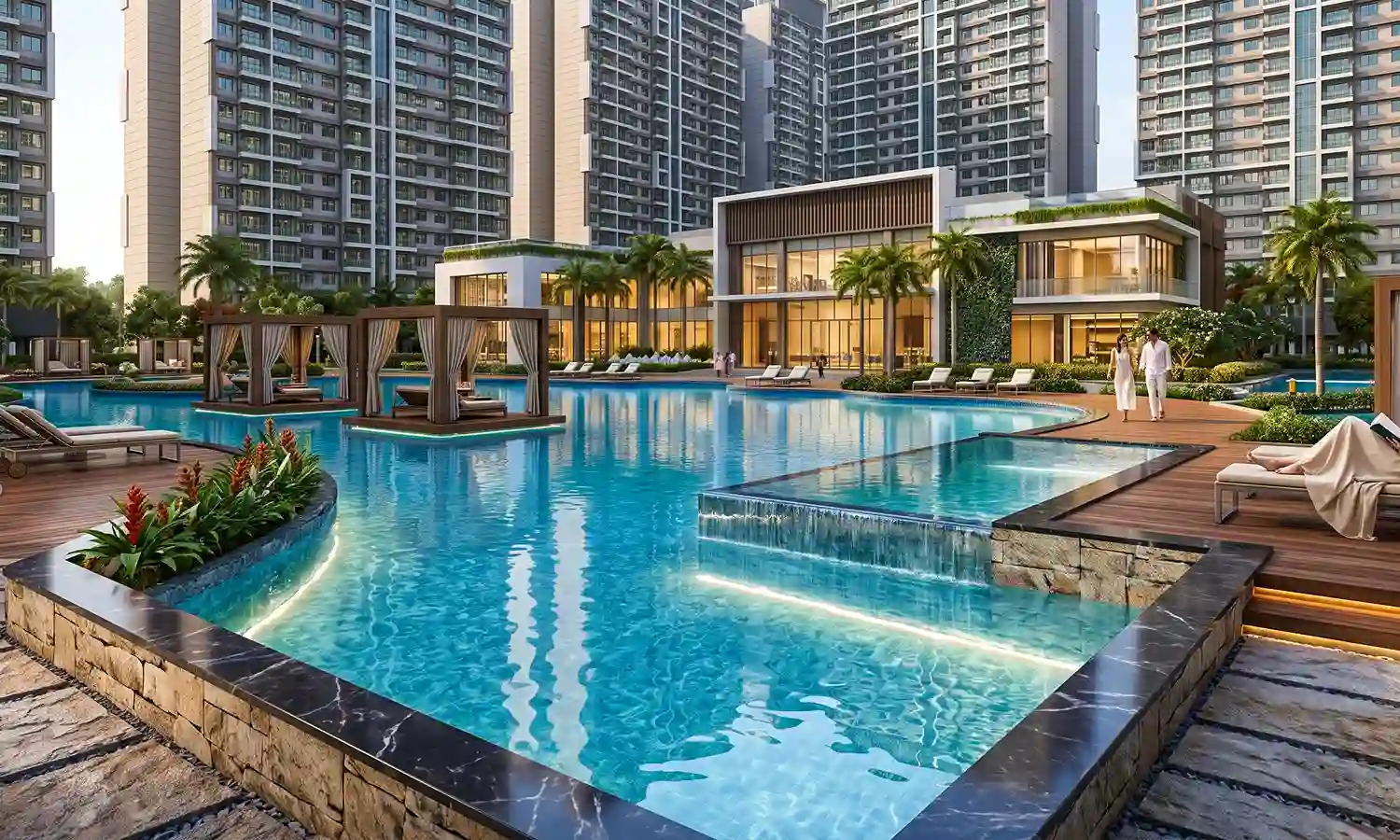
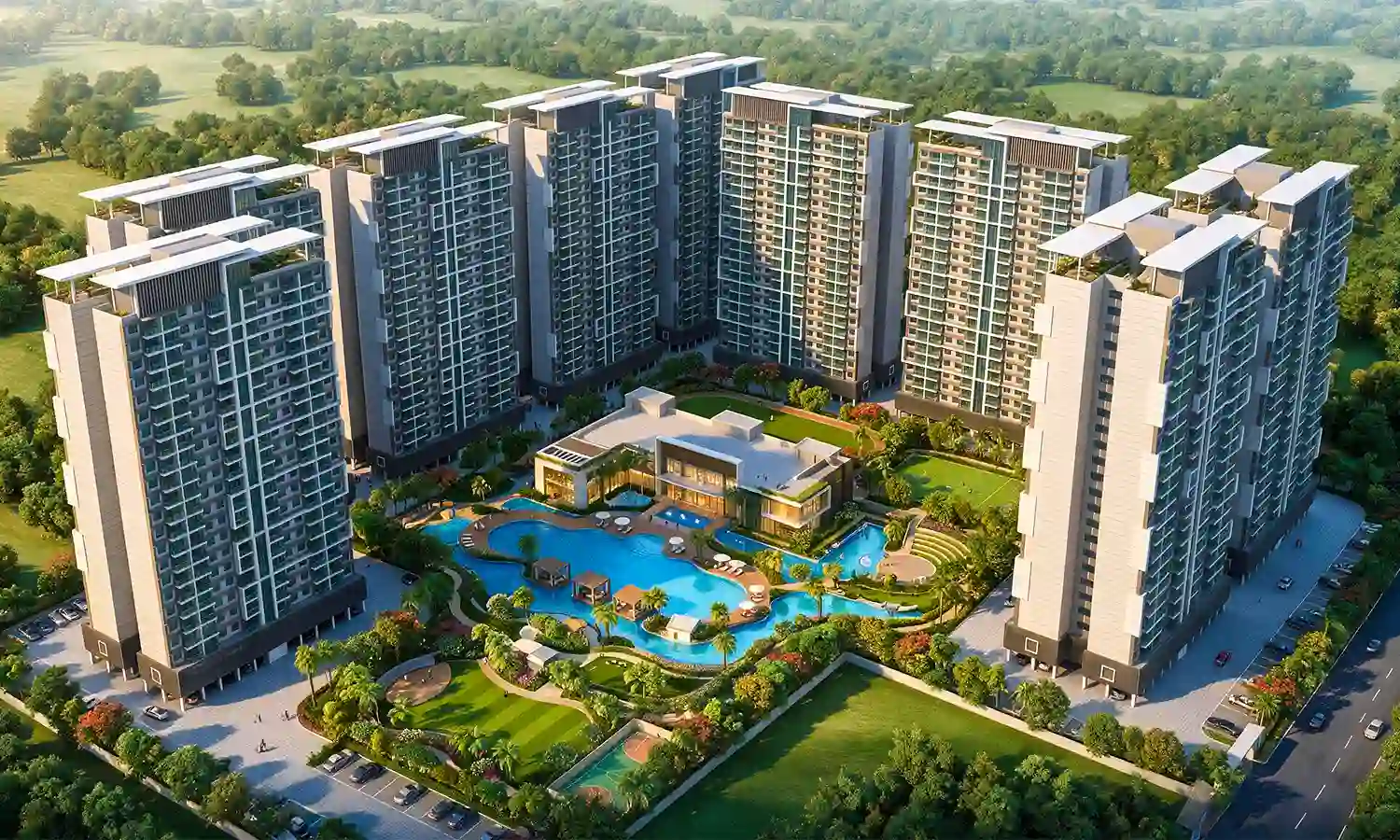
A render of the intended podium outlook. At token stage this is what exists: an intention, drawn. · Artistic impression
What a token actually is
A token is a queue position, priced. You are paying to be in the room before the price list exists, in exchange for a preferential rate when it does.
That is a real thing, not a fiction. Developers genuinely price early buyers below later ones, because early bookings fund the launch and de-risk it. The discount is usually somewhere between three and eight per cent, and on a ₹1.53 crore flat that is meaningful money.
The refundable and non-refundable split
The difference between the Gold and Platinum tiers is not really the amount. It is who carries the risk of you changing your mind.
The refundable token is the lower-commitment option. You get a position and you keep your exit. Expect the rate benefit attached to it to be smaller, because you are offering the developer less certainty.
The non-refundable token is a genuine commitment. If the launch price disappoints you, or the layout is not what you expected, or your circumstances change, that money is gone. In exchange you should be getting a materially better rate.
If the rate benefit is the same on both, take the refundable one. There is no reason to pay for optionality you are giving away.
Six questions to ask before you pay
What exactly is the rate benefit, in rupees per square foot? Not “special rate”. A number, in writing.
What happens to the token if I book? It should adjust against the booking amount in full. Confirm it is not treated as a separate charge.
What happens if I do not book? For the refundable tier, ask for the refund window and the process in writing, on the receipt.
What happens if the developer does not launch, or launches a different configuration than the one my token covers? This is the scenario nobody writes down and the one worth pinning.
Which phase and which wing does the token apply to? The project is registered in phases. A benefit on Phase 2 is not a benefit on Phase 5.
Who is the payee? A token should go to the promoter or an authorised escrow, not to an individual, and the receipt should carry the registered entity name.
The rule that sits behind all of this
Under the Real Estate (Regulation and Development) Act, a promoter cannot accept more than ten per cent of the cost of the apartment before a written agreement for sale is executed and registered.
Every token tier listed above sits well within that ten per cent, so none of them offends the rule. Where it becomes relevant is the step after: if you are asked to move from a token to a booking amount that crosses ten per cent, the agreement has to be executed and registered first. Not promised. Executed.
The honest calculation
A token is worth taking if three things are true: you have decided you want to buy here, the rate benefit is quantified in writing, and the amount at risk is money you can afford to lose without it changing anything.
If any of those three is missing, wait for the launch. You will pay slightly more and you will know exactly what you are paying for, which is the trade this whole decision comes down to.
Sources
Project marketing partner microsites, fetched 5 August 2026
Developer pre-launch campaign creatives, supplied 5 August 2026
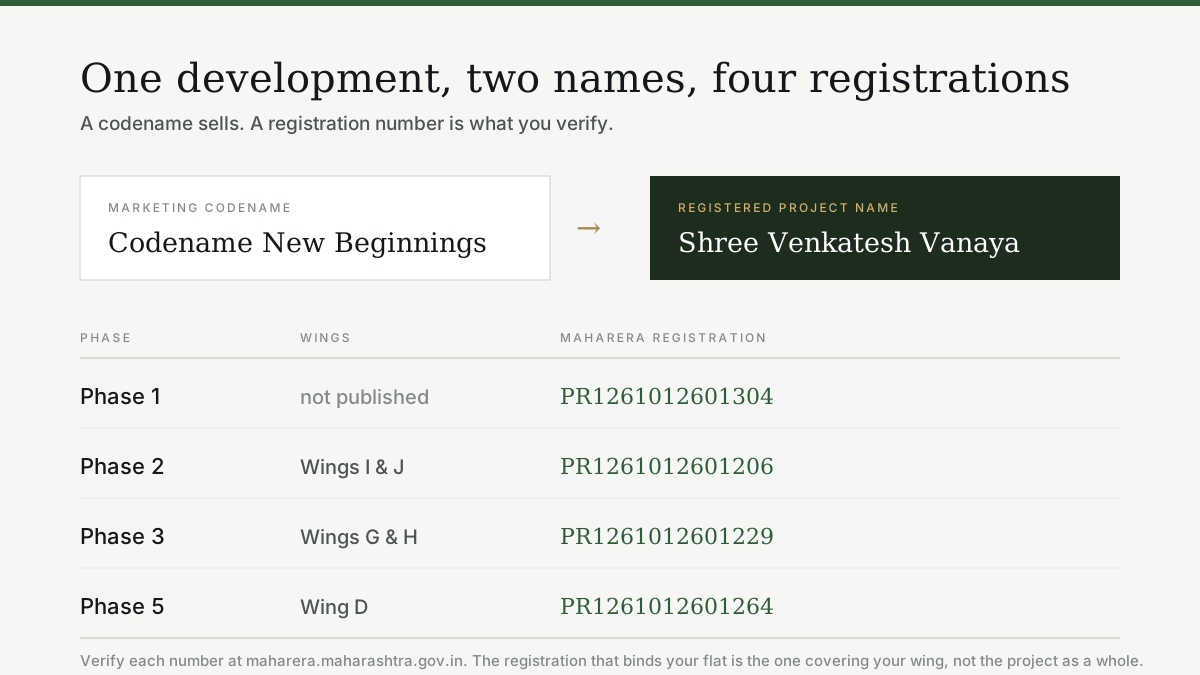
Codename New Beginnings is registered as Shree Venkatesh Vanaya
Searching MahaRERA for Codename New Beginnings returns nothing. The project is registered under a different name, in phases, and here is how the two line up.
The amenity list, sorted by how often you would actually use it
Twenty-five plus recreations is a marketing number. Sorted by how many times a year a normal household touches each one, the list looks very different.
Reading the master plan: 10 acres, 11 towers, and the space between
A master plan is the one drawing that tells you what living there will be like. Here is how to read this one, and the four questions it raises that a brochure will not answer.